


How Many Osteopathy Sessions for Babies: A Parent's Guide
Table of Contents
How Many Osteopathy Sessions Do Babies Typically Need?
Factors That Influence the Number of Sessions Required
Age and developmental stage
Nature and duration of the condition
Individual response to treatment
Osteopathic Care for Babies After Tongue Tie Release
What to Expect at a Baby Osteopath Appointment
Benefits of Paediatric Osteopathy
When to Seek Additional Treatment or Second Opinion
Frequently Asked Questions
Last Updated: October 4, 2026
How Many Osteopathy Sessions Do Babies Typically Need?
How many osteopathy sessions for babies your child needs varies depending on what you're treating and how your baby responds. Most babies benefit from between two and six sessions, though some may need more or fewer depending on their individual circumstances.
There's no one-size-fits-all answer because every baby is different. A newborn with tongue tie tension might improve within two to three sessions. A baby struggling with reflux or colic could need four to six visits. The key is working with a qualified osteopath who can assess your baby and give you realistic expectations from the start.
At Nurture Osteo, we understand that parents want to know upfront how many sessions their baby might need. We assess each infant individually and discuss a treatment plan with you before starting.
Pro Tip Ask your osteopath for a provisional treatment plan at your first appointment. A good practitioner will explain what they've found, why they think your baby needs treatment, and roughly how many sessions they recommend. This gives you confidence and helps you plan.
Factors That Influence the Number of Sessions Required
Several factors shape how many osteopathy sessions for babies your child might need. Understanding these helps you set realistic expectations and work effectively with your osteopath.
Age and developmental stage
A newborn's body is very different from a six-month-old's, and both are different from a one-year-old's. Younger babies often respond quickly to treatment because their tissues are still very pliable and adaptable.
Newborns with feeding difficulties from birth trauma or tongue tie tension sometimes improve noticeably within two sessions. Older babies who've had longer to develop compensatory patterns might need more sessions because their bodies have adapted around the problem.
The developmental stage also affects what an osteopath can treat. A very young baby can't tell you where it hurts or what feels better. An older baby might show clearer signs of improvement, better sleep, easier feeding, reduced wind.
Nature and duration of the condition
How long your baby has had the problem matters. A feeding issue that started last week responds faster than one that's been present for three months.
Acute problems, those that started recently, typically need fewer sessions. Chronic issues that have developed over weeks or months usually require a longer course of treatment because the body has adapted around the dysfunction.
Some conditions are straightforward mechanical problems. Others are more complex. A baby with pure tongue tie tension might need two sessions. A baby with tongue tie plus reflux plus poor sleep might need a longer treatment plan addressing all three interconnected issues.
Key Takeaway The longer a problem has existed, the more sessions are typically needed because your baby's body has developed compensatory patterns around it.
Individual response to treatment
Every baby responds differently to osteopathic treatment. Some babies show dramatic improvement after one session. Others improve gradually over several visits.
Your baby's individual response depends on factors like their general health, how much tension they're carrying, and their natural healing capacity. A strong, healthy baby with minimal tension might improve quickly. A baby who's been struggling to feed for months and is carrying significant tension might need a slower, gentler approach with more sessions.
Some babies also need ongoing maintenance sessions. After the main course of treatment resolves the acute problem, occasional check-ups help prevent issues from returning.
Osteopathic Care for Babies After Tongue Tie Release
Many parents ask whether osteopathic care helps after their baby has had a tongue tie division. The answer is yes, osteopathy sessions for babies often complement surgical release beautifully.
When a tongue tie is surgically divided, the tissue underneath has been held tight for weeks or months. The baby's feeding muscles have adapted to that restriction. After division, the baby needs to relearn how to move their tongue freely. This is where osteopathy becomes valuable.
An osteopath can help release the residual tension in the muscles and tissues around the tongue, jaw, and neck. They can also check for any other restrictions that might have developed because of the tongue tie, perhaps the baby was compensating by tensing their shoulders or jaw.
Most babies benefit from one to three sessions after tongue tie release. The first session is often within a week of the division, whilst the tissues are still healing. Follow-up sessions help ensure the baby's feeding pattern normalises and no new compensations develop.
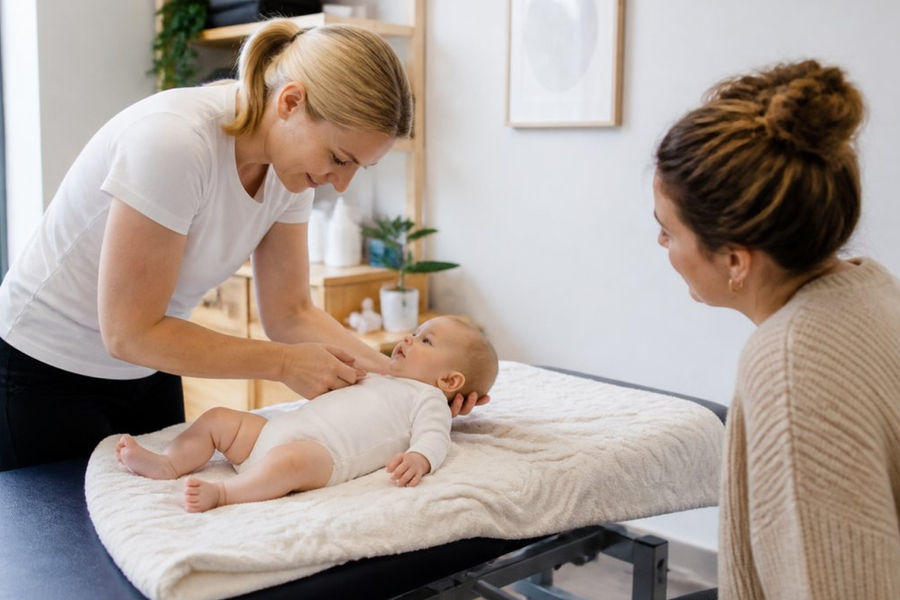
What to Expect at a Baby Osteopath Appointment
Your first appointment will involve a thorough assessment. The osteopath will ask detailed questions about your baby's birth, any feeding difficulties, sleep patterns, and your main concerns.
They'll observe your baby's posture, movement, and how they interact with you. They'll gently feel your baby's head, neck, spine, and limbs to identify areas of tension or restriction. This hands-on assessment is gentle and non-invasive, it shouldn't cause distress.
Treatment itself is very gentle. For babies, osteopaths use light touch techniques. You might see them gently cradling your baby's head, softly releasing tension in the neck, or supporting the baby's spine whilst they move through gentle ranges of motion. It looks subtle because it is, babies need subtle, careful treatment.
Most appointments last 30 to 45 minutes, though the actual hands-on treatment might be just 15 to 20 minutes. Babies tire easily, and overtreating can be counterproductive. Your osteopath will work at your baby's pace.
You'll usually be asked to hold your baby during treatment, or at least stay close by. This keeps your baby calm and lets you feel what the osteopath is doing. Many parents find this reassuring, you can see exactly how gentle the treatment is.
After treatment, your osteopath will discuss what they found and what they recommend. They'll explain whether they think more sessions are needed and roughly when to book the next one. They might also suggest simple things you can do at home, positioning tips for feeding, gentle movements to encourage, or things to avoid.
Watch Out If an osteopath treats your baby roughly, rushes through appointments, or doesn't involve you in the process, seek a second opinion. Paediatric osteopathy requires specialist training and a very gentle touch. Nurture Osteo's team has specialised certifications in paediatric and cranial osteopathy.
Benefits of Paediatric Osteopathy
When osteopathy sessions for babies are done well, the benefits can be significant.
Feeding often improves noticeably. Babies who struggled with latching, wind, or reflux frequently feed more effectively after treatment.
Sleep often improves. Babies who were waking frequently or struggling to settle sometimes sleep longer and more deeply after osteopathy.
Digestion frequently settles. Babies with colic, reflux, or excessive wind often show improvement.
Beyond these specific issues, many parents report that their baby simply seems more settled and comfortable.
Osteopathy also works well alongside other treatments. If your baby is seeing a lactation consultant, a tongue tie specialist, or has been referred to a paediatrician, osteopathy complements those interventions rather than replacing them.
When to Seek Additional Treatment or Second Opinion
If your baby has completed a course of osteopathy sessions and hasn't improved, it's reasonable to seek a second opinion. Different osteopaths have different skill sets and approaches. Sometimes a fresh pair of hands and eyes identifies something the first practitioner missed.
You should also seek further investigation if your baby has worsening symptoms, develops new symptoms, or shows signs of serious illness, fever, persistent vomiting, inability to feed, or unusual crying. These warrant assessment by your GP or health visitor, not just osteopathic treatment.
If your baby improves initially but then plateaus, discuss this with your osteopath. They might recommend a different approach, a longer gap between sessions, or referral to another specialist. A good osteopath knows when osteopathy alone isn't enough.
Some babies benefit from ongoing maintenance sessions, perhaps one every few months, to prevent problems from returning. Others need treatment only when a new issue arises. Your osteopath will help you decide what's right for your baby.
Remember that osteopathy is one tool in your toolkit. If feeding is still difficult after osteopathy, lactation support might be the missing piece. If sleep is still poor, a health visitor's assessment might reveal something else. The best outcomes often come from a coordinated approach involving several professionals.
Finding the right osteopathic care for your baby makes a real difference. If you're in the area and your baby is struggling with feeding, settling, or post-tongue-tie recovery, Nurture Osteo offers specialist paediatric and cranial osteopathy with a highly experienced team trained in gentle infant care. Our approach combines thorough assessment with tailored treatment to help your baby feel more comfortable and settled. Learn more about paediatric osteopathy and book your baby's assessment to discuss how many sessions might help your little one.
Frequently Asked Questions
How many osteopathy sessions does a baby typically need?
The number of sessions varies widely. Your osteopath will assess your baby's specific condition and recommend a treatment plan tailored to their needs. Progress is often visible within the first few sessions, but the full course helps ensure lasting improvement.
What conditions can paediatric osteopathy help with?
Paediatric osteopathy addresses feeding difficulties (latching, tongue tie effects), colic, reflux, constipation, sleep disturbances, and postural issues. It can also support babies recovering from difficult births or those with asymmetrical head shape. The gentle techniques used help restore mobility and reduce tension that may be contributing to these problems. Always discuss your baby's specific symptoms with a qualified osteopath to confirm whether treatment is appropriate.
How long does it take to see results from baby osteopathy?
Many parents notice improvements within the first few sessions, particularly with feeding issues or sleep patterns. However, some conditions take longer to resolve. Colic and reflux may show gradual improvement over a course of treatment. The timeline depends on how long the issue has been present, your baby's age, and how their body responds. Your osteopath will discuss realistic expectations during your first appointment.
Is cranial osteopathy safe for newborns?
Yes, cranial osteopathy is considered safe for newborns when delivered by a qualified, experienced practitioner. The techniques are extremely gentle and involve only light touch. Practitioners trained in paediatric and craniosacral methods understand the delicate nature of infant anatomy. However, always ensure your osteopath has specialist paediatric training and ask about their experience with newborns before booking.
Visit Nurture Osteo today!


Comments