


7 Ways Sports Massage Eases Shoulder Tension
Last Updated: November 10, 2026
Quick Summary
Sports massage eases shoulder tension by targeting the muscles, fascia and connective tissue around the joint, using hands-on pressure and movement to release tension, ease knots and improve blood flow. It aims to restore range of motion and reduce stiffness, and works best alongside movement and strengthening.
Your shoulders stay partly switched on during desk work, bag carrying and phone use, building stiffness over time.
A session may combine deep tissue massage, trigger point therapy, myofascial release, soft-tissue mobilisation and stretching.
Mild soreness for 24 to 48 hours after a session is common and usually settles on its own.
A common pattern is three to six sessions spaced a week or so apart, then a review.
Take a short movement break every 30 to 45 minutes rather than sitting for long stretches.
Shoulders tight from desk work?
Hands-on massage and rehab advice to ease shoulder tension and restore movement.
Table of Contents
Why Shoulders Carry So Much Tension
Your shoulders hold tension for a simple reason: they never fully switch off. Every time you reach for a keyboard, carry a bag or hunch over a phone, the muscles around the shoulder stay partly switched on. Over weeks and months, that low-level activity builds into stiffness and pain.
This pattern is common in people who sit at a desk all day. The shoulder joint is the most mobile joint in the body, and that mobility comes at a cost (Shoulder pain). It relies on soft tissue to hold it steady, so when those tissues tighten, movement suffers.
Common Causes of Shoulder Pain and Stiffness
Shoulder pain rarely comes from one single event. It usually builds from a mix of daily habits:
Postural tension from desk work, driving or looking down at a phone
Repetitive strain from lifting, typing or overhead tasks
Muscle knots and adhesions that form in the upper back and neck
Rotator cuff strain after sport or sudden heavy lifting
Reduced blood flow to tight, inactive muscles
Stress plays a part too. When you feel anxious, you raise your shoulders without noticing. Do that for hours a day and the trapezius and deltoid muscles stay short and tight.
How Sports Massage for Shoulder Pain Works
Sports massage for shoulder pain works by targeting the soft tissues around the joint: the muscles, fascia and connective tissue. A practitioner uses hands-on pressure and movement to release tension, ease muscle knots and improve blood flow.
The aim is to restore range of motion and reduce stiffness. Sports massage is a form of manual therapy used alongside other approaches in musculoskeletal care. It is not a cure on its own. It works best as part of a wider plan that includes movement and strengthening.
If you want to see the hands-on techniques we offer, you can explore our massage treatments and what each one involves.
Techniques Used in Shoulder Massage
A session may combine several approaches:
Deep tissue massage for stubborn knots in the upper back
Trigger point therapy to release tight spots that refer pain
Myofascial release to free up restricted connective tissue
Soft-tissue mobilisation to improve joint glide
Stretching to restore tissue elasticity
The mix depends on your assessment. An acute injury needs gentler work than long-standing chronic pain.
Sports Massage for Rotator Cuff Pain
The rotator cuff is a group of four small muscles that steady the shoulder. When they are overloaded or tight, raising your arm can hurt. Sports massage may ease the surrounding tension and support recovery, but it does not repair a torn tendon by itself.
That is why we combine massage with a proper physical assessment. If your rotator cuff needs structured rehab, our physiotherapy service builds a recovery plan around strength and movement.
Watch out: pushing hard into a painful shoulder without an assessment can make an acute injury worse. Get the shoulder looked at first.
What to Expect in a Neck and Shoulder Massage Session
A neck and shoulder massage session typically takes a while, and a first appointment usually includes a case history before any hands-on work begins.

The appointment tends to follow a predictable pattern:
Assessment and history. Your practitioner asks where the tension sits, what makes it worse, how long it has been present and whether you have had any previous injuries. They may ask you to raise your arm, turn your head or roll your shoulder so they can see how the joint moves.
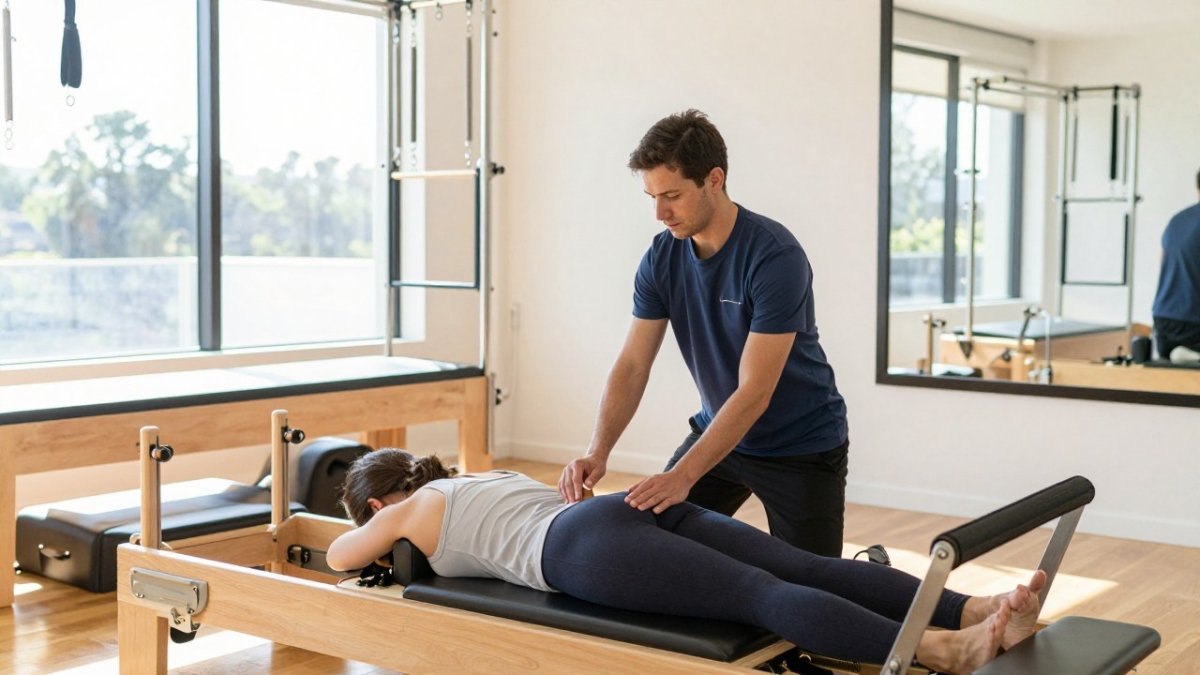
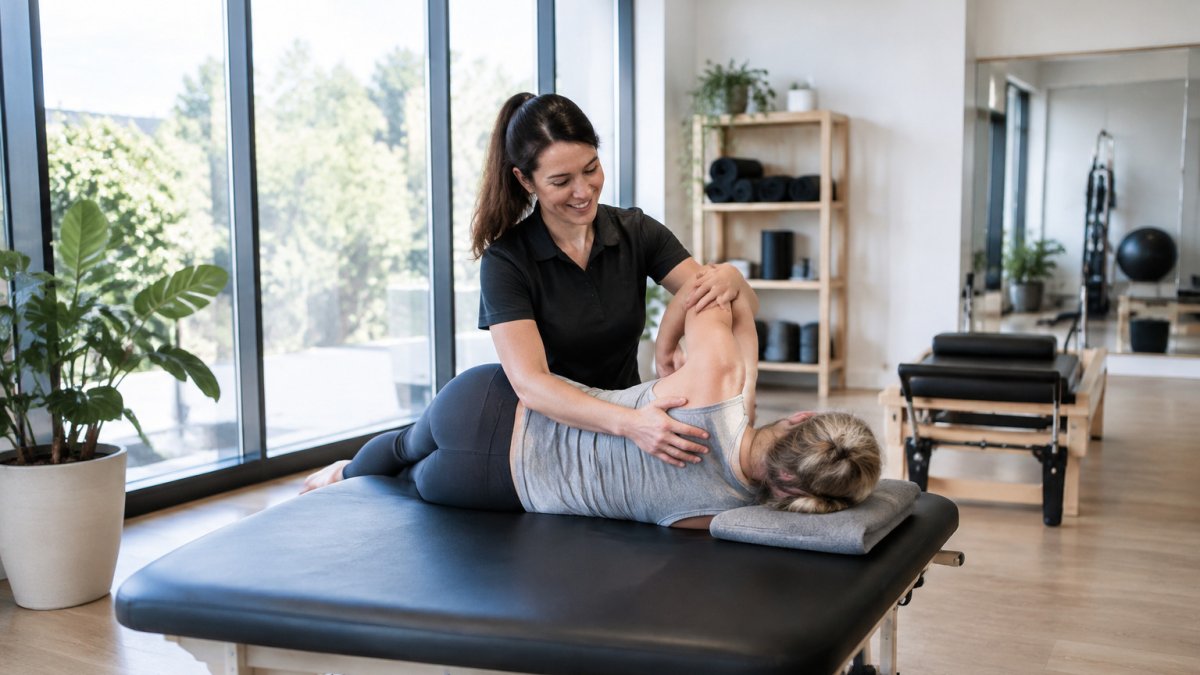
Positioning. Most shoulder work is done with you lying face down, face up or on your side, supported by towels and bolsters. You stay clothed or partly undressed depending on the technique and your preference; you will be covered throughout except for the area being treated.
Treatment. Your practitioner works through the upper back, trapezius, neck, deltoid and rotator cuff muscles using the techniques described above. Pressure is built up gradually and checked with you as the session goes on.
Reassessment. Towards the end, your practitioner may ask you to repeat the movements from the assessment so you can both see what has changed.
Aftercare advice. You leave with guidance on movement, stretching and what to expect over the next day or two.
Most people feel looser and lighter straight after a session. Mild soreness for 24 to 48 hours is common, similar to the day after unaccustomed exercise, and usually settles on its own. Drinking water and keeping the shoulder moving gently tends to help. As the soreness settles, gentle movement can help maintain that easier range of motion, with Calm Library offering another way to keep the shoulder moving comfortably.
If you feel sharp pain during a session rather than a dull working pressure, tell your practitioner straight away.
How Many Sessions Will You Need?
There is no fixed number, and any practitioner who promises one before assessing you is guessing. A 2017 review in a systematic review of massage for shoulder pain found that massage may improve shoulder pain, but the authors called for more research. One study in that review reported a greater long-term effect from a course of deep-tissue sessions, though this is not a standard schedule for everyone.
A common pattern is to start with a small block of sessions, often three to six, spaced a week or so apart, then review. If the shoulder is no better and no clearer after that block, the sensible step is a reassessment rather than simply booking more. You can check our service pricing before you commit.
A first appointment tends to follow a predictable pattern from assessment through to aftercare.
Stage | What happens |
Assessment and history | Practitioner asks about tension, triggers, duration and previous injuries |
Positioning | Lying face down, face up or on your side, supported by towels and bolsters |
Treatment | Work through upper back, trapezius, neck, deltoid and rotator cuff |
Reassessment | Repeat the assessment movements to see what has changed |
Aftercare advice | Guidance on movement, stretching and what to expect next |
After the session | Feel looser straight away; mild soreness for 24 to 48 hours is common |
Shoulder Tension Exercises to Do at Home
Daily movement does much of the work between sessions, and a few minutes of self-massage can take the edge off before you stretch. The routine below is designed to be done safely at home.
Self-Massage for Immediate Relief
You do not need equipment to release a tight upper back. Try these, keeping pressure comfortable rather than sharp:
Tennis ball against a wall. Stand with a tennis ball between your upper back and a flat wall, just beside the shoulder blade. Lean in and roll slowly over the tight spot for 30 to 60 seconds. Breathe out as you lean in.
Cross-body thumb work. Reach your opposite hand across to the top of your shoulder and press gently into the trapezius in small circles for 20 to 30 seconds. Keep the pressure on muscle, not on the bony point of the shoulder.
Doorway pec release. Place your forearm on a door frame at shoulder height, step through gently and hold for 20 seconds to open the front of the shoulder.
Watch out: never work directly over the front of the throat, the bony point of the shoulder or an area that is hot, swollen or bruised, and stop if you feel numbness or tingling down the arm.
Stretching and Mobility Routine
Aim to move the shoulder through its full range rather than just stretching it:
Shoulder rolls: 10 slow rolls backwards, twice a day.
Doorway chest stretch: hold for 20 seconds, three times.
Wall slides: 10 slow reps to improve range of motion.
Neck side stretch: 15 seconds each side.
Band pull-aparts: 12 reps to strengthen the upper back.
A five-minute routine after a massage, while the tissue is warm, tends to be more productive than the same routine done cold.
Ergonomic Adjustments for Desk Workers
Good ergonomics matter as much as exercise, because the tension returns if the setup that caused it does not change:
Raise your screen so the top of the display is at eye level (Working safely with display screen equipment).
Keep your elbows close to your sides and your forearms roughly parallel to the floor.
Support the lower back so you are not slumped forward.
Keep both feet flat and avoid cradling a phone between ear and shoulder.
Take a short movement break every 30 to 45 minutes rather than sitting for long stretches.
For more guided routines, see our upper back stiffness exercises.
When to Seek Professional Medical Advice
Some shoulder symptoms need prompt attention. Seek medical advice if you have:
Sudden severe pain after an injury
Weakness or numbness in the arm or hand
A shoulder that looks deformed
Pain with fever, or pain that wakes you at night
No improvement after a few weeks
These signs can point to something that needs medical assessment, not just massage. A qualified clinician can decide what is right for you.
Book Your Sports Massage Consultation
Shoulder tension rarely sorts itself out without a plan. If daily stiffness is limiting your movement or sleep, a proper assessment is a sensible next step. Nurture Osteo offers osteopathy, physiotherapy and massage therapy for musculoskeletal pain and dysfunction.
Get started with Nurture Osteo and book your appointment to begin easing shoulder tension.
A stiff shoulder can quietly wear you down, but you do not have to manage it alone. Our practitioners assess the whole picture, then build a plan around your movement and daily habits. Book online to take the first step.
Frequently Asked Questions
Can sports massage help with shoulder tension?
Yes, sports massage can help ease shoulder tension by targeting tight muscles, improving blood flow, and releasing trigger points. Some research suggests massage therapy may help shoulder pain, though the authors noted further research is needed. Sports massage is particularly useful for postural tension from desk work or repetitive strain.
How often should you have a sports massage for tight shoulders?
Frequency depends on your symptoms and lifestyle. For ongoing postural tension, a session every two to four weeks is a common starting point, while acute flare-ups may benefit from closer spacing initially. A therapist can tailor a plan after assessing your shoulders.
Is sports massage suitable for shoulder pain from a rotator cuff problem?
Sports massage can be part of a rehabilitation plan for rotator cuff pain, but it should not replace a proper assessment. A therapist will check your range of motion and identify whether the issue is muscular, tendinous, or joint-related. If you have an acute injury, severe pain, or a suspected tear, seek medical advice first. Massage may help reduce surrounding muscle stiffness and support recovery once a diagnosis is confirmed.
Should a sports massage hurt?
A sports massage should feel like a firm, purposeful pressure, not sharp or unbearable pain. Some discomfort during trigger point work is normal, but you should always be able to breathe through it and speak up if it feels too intense. Soreness for 24 to 48 hours afterwards is common, similar to after exercise. If pain persists or worsens, tell your therapist and consider whether a gentler approach or medical review is needed.
Comments