


Postpartum Osteopathy After Childbirth: A Parent's Guide
Table of Contents
Postpartum Osteopathy After Childbirth: What It Is and Who It Helps
When Can I See an Osteopath After Giving Birth?
What Happens During a Postnatal Osteopathy Appointment
Osteopathy After Caesarean Section: What to Expect
Postpartum Back Pain Treatment: How Osteopathy Fits In
How to Choose a Qualified Postpartum Osteopath
How Many Sessions Will You Need?
Frequently Asked Questions
Last Updated: 21 October 2026
Postpartum Osteopathy After Childbirth: What It Is and Who It Helps
Postpartum osteopathy after childbirth is a hands-on treatment that helps new parents recover from the physical strain of pregnancy, labour and the early weeks of caring for a baby. At Nurture Osteo, we see it as a practical recovery tool rather than a luxury. Your body has just done something enormous. A structured, gentle approach to getting it moving again can make a real difference.
The treatment focuses on the parts of you that carry the load: lower back, pelvis, hips, neck and shoulders.
It suits parents who are:
Dealing with ongoing back or hip pain weeks after birth
Feeling stiff, twisted or "not quite back in their body"
Struggling with posture from feeding and carrying
Recovering from a caesarean section
Wanting reassurance that what they feel is normal
Osteopathy is a regulated profession in the UK, and practitioners are expected to work within clear standards set by the General Osteopathic Council. That matters when you are choosing who to trust with your recovery.
When Can I See an Osteopath After Giving Birth?
Most parents can book an appointment within the first few weeks after birth, but the right timing depends on how you delivered and how you feel. There is no universal rule, and any practitioner who promises a fixed timeline before assessing you is guessing.
A sensible approach:
Vaginal birth without complications: many parents feel ready to be seen after their first postnatal check, once bleeding has settled and they feel well enough to travel.
Caesarean section: wait until your wound has been reviewed and you are comfortable moving around, then ask your GP or midwife if there is any reason to delay.
Any birth with complications: speak to your GP, midwife or health visitor first.
If you have heavy bleeding, fever, severe headache, calf pain or wound problems, that is a medical matter, not an osteopathic one. Get it checked before booking anything.
What Happens During a Postnatal Osteopathy Appointment
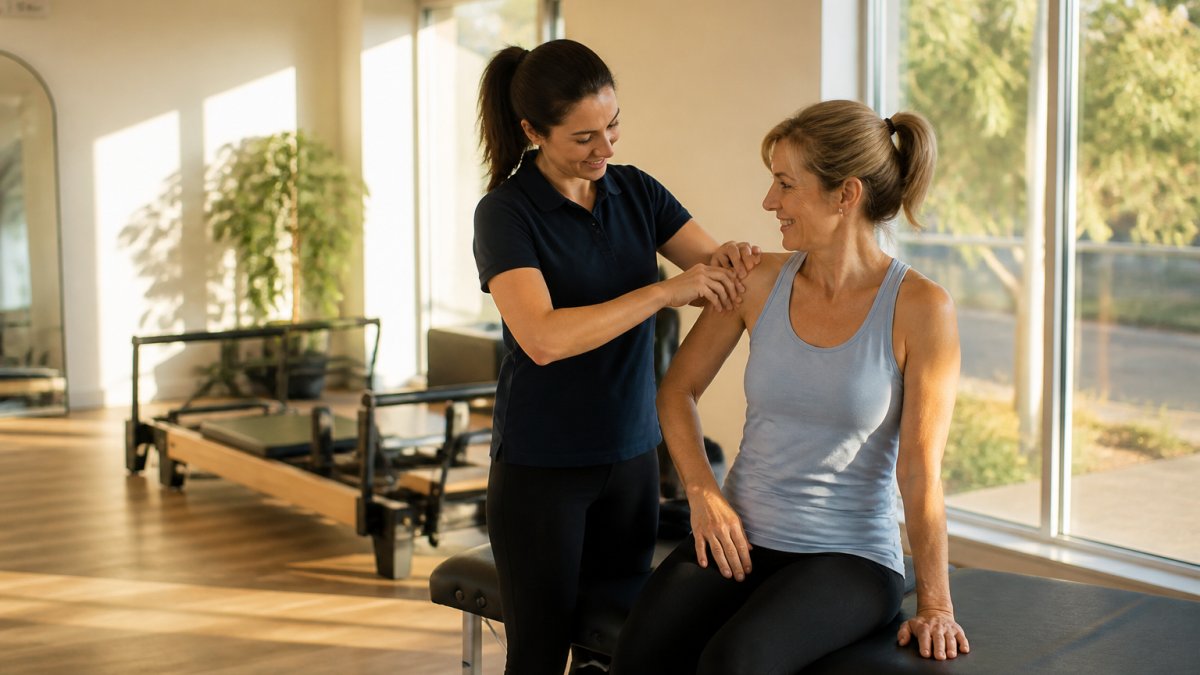
A first appointment usually lasts around 45 minutes and follows a predictable pattern: a detailed history, a physical assessment, treatment, and advice you can use at home. You stay clothed for most of it, and you can stop at any point.

Here is the shape of a typical session:
Case history. We ask about your pregnancy, birth, any interventions, your current symptoms and how you are feeding and carrying your baby.
Assessment. We look at how you stand, sit, bend and move. We may check your pelvis, hips, spine and shoulders.
Hands-on treatment. Gentle soft tissue work, joint mobilisation and cranial techniques where appropriate. Nothing should be painful.
Advice. Positioning for feeding, safe lifting, simple exercises and what to expect over the next few days.
The first visit is mostly about understanding your situation. Treatment is tailored, not applied from a template.
Osteopathy After Caesarean Section: What to Expect
Osteopathy after caesarean section is adapted carefully around your scar and your recovery timeline. We do not work directly on a healing wound. Instead, we look at how the surrounding tissues, pelvis and lower back are coping with the changes. Addressing these physical compensations often provides a smoother transition for your baby as well, which you can explore further in our infant adjustment guide.
What most guides miss is how much a caesarean affects the way you move. You guard your abdomen, you compensate with your back, and your posture shifts. That pattern can linger for months.
Expect the first session to focus on:
How you are moving and where you are guarding
Gentle work on the lower back, hips and upper body
Breathing and scar-desensitisation advice, once your wound is ready
Guidance on lifting, carrying and getting up from a chair
Watch Out Do not let anyone treat directly over a caesarean scar without checking with your GP or midwife first. Working on healing tissue too early can cause problems rather than solve them.
Postpartum Back Pain Treatment: How Osteopathy Fits In
Postpartum back pain treatment works best when it combines hands-on care with changes to how you move every day. Osteopathy can ease muscular tension and improve joint mobility, but the lasting gains come from the habits you build between sessions.
The common culprits are predictable:
Feeding in a hunched position for long stretches
Carrying a car seat on one hip
Bending over a cot instead of squatting
Sleeping in awkward positions to protect a sore side
We look at all of these. Treatment might include soft tissue work on the lower back and hips, mobilisation of stiff joints, and simple strengthening advice for the deep core and glutes.
A common mistake is waiting until the pain is severe. Parents often put themselves last. Booking early tends to mean fewer sessions overall, not more.
How to Choose a Qualified Postpartum Osteopath
Choosing a qualified postpartum osteopath comes down to three checks: registration, experience with postnatal patients, and how they communicate with you. Get these right and the rest usually follows.
Use this checklist:
Are they registered with the General Osteopathic Council? You can check the register directly.
Do they regularly treat postnatal parents, not just general back pain?
Do they explain what they are doing and why, in plain language?
Do they ask about your birth, feeding and recovery before touching you?
Are they happy to talk to your GP or midwife if needed?
Does the clinic feel calm and give you space to feed or settle your baby?
At Nurture Osteo, our team holds specialist paediatric and cranial osteopathy qualifications. We support babies with feeding and settling issues through gentle paediatric and cranial osteopathy, while also delivering relief from chronic pain, sports injuries, and everyday muscle tension for adults.
Pro Tip Ask on the phone whether the practitioner has specific postgraduate training in postnatal or cranial work. A short, direct answer tells you a lot.
How Many Sessions Will You Need?
The number of sessions needed varies with how long symptoms have been present and how much you can change day to day. We review progress at every visit rather than selling fixed packages.
Signs you are on track:
Pain easing during everyday movements
Better sleep and less tension in the shoulders and neck
Feeling more confident lifting and carrying your baby
Exercises becoming easier
If nothing changes after two or three sessions, we will say so and suggest another route, whether that is your GP, a physiotherapist or a different approach entirely.
Frequently Asked Questions
What does an osteopath do after childbirth?
A postpartum osteopath assesses how your body has adapted through pregnancy and birth, then uses gentle hands-on techniques to ease tension in the back, pelvis, hips and shoulders. They may also give you simple exercises and advice on lifting, feeding positions and carrying your baby. Sessions are tailored to your stage of recovery. Postpartum osteopathy is not a treatment for a medical condition on its own, so your practitioner will work alongside your GP or midwife where needed. Book a consultation to discuss your specific situation.
Is osteopathy safe after a caesarean birth?
Osteopathy after caesarean section can be appropriate once your wound has begun to heal, but timing depends on your individual recovery and any advice from your midwife, GP or obstetric team. Practitioners usually avoid direct pressure on the scar and focus on surrounding tissues, posture and movement. Tell your osteopath about your surgery, any complications and any medication you are taking at your first appointment. If you have concerns about your scar or healing, speak to your GP or midwife before booking.
Can osteopathy help with back pain after childbirth?
Many new parents seek postpartum back pain treatment because of feeding posture, lifting, carrying and disrupted sleep. Osteopathy can help ease muscular tension and improve mobility, and your practitioner may suggest changes to how you feed, sit and lift. Results vary between people, and osteopathy works best alongside gentle movement and rest where possible. If your back pain is severe, persistent or comes with other symptoms, see your GP first so any underlying cause can be checked.
Should I see an osteopath or a physiotherapist for postnatal recovery?
Both can help, and the right choice depends on your symptoms and goals. Osteopaths often focus on how the whole body is moving and use hands-on treatment alongside exercise advice. Physiotherapists specialise in rehabilitation and are commonly the first point of contact for pelvic floor or diastasis recti concerns. Many people see both at different stages. Ask your GP, health visitor or midwife for guidance, and choose a practitioner registered with the General Osteopathic Council or the Health and Care Professions Council respectively.
Recovery after birth is not a race, and it is not something you should push through alone. If back pain, stiffness or postural strain is holding you back, Nurture Osteo can help with tailored osteopathy, gentle cranial work for babies, and rehabilitation advice built around your real life. Our team combines structural, craniosacral and myofascial techniques in a calm studio setting. Book online with Nurture Osteo and start feeling more like yourself again.
Visit Nurture Osteo today!
Comments