


How Osteopathy Helps Age-Related Joint Stiffness
Table of Contents
Understanding Age-Related Joint Stiffness
How Osteopathy Addresses Joint Stiffness
Osteopathic Treatment for Osteoarthritis
Benefits of Osteopathy for Mobility
Exercises for Stiff Joints in Older Adults
What to Expect from Your First Osteopathy Session
Is Osteopathy Right for Your Joint Concerns?
Frequently Asked Questions
Last Updated: September 25, 2026
Understanding Age-Related Joint Stiffness
Age-related joint stiffness affects many people as they get older. Your joints become less flexible and moving becomes harder. This happens because the fluid inside your joints decreases over time, and the cartilage that cushions your bones wears down. (Source: the National Institute for Health and Care Excellence (NICE) guidelines)
Several factors make stiffness worse:
Reduced movement and activity
Loss of muscle strength around joints
Changes in the tissues that support your joints
Inflammation in the joint space
Dehydration of cartilage
Morning stiffness is common. Many people find their joints feel tight when they first wake up. Movement usually helps loosen things up within 30 minutes.
The good news is that stiffness responds well to treatment. Gentle movement, stretching, and hands-on therapy can restore mobility. Addressing stiffness early can prevent it from worsening and help people stay active longer.
Pro Tip Start moving gently as soon as you wake up. Even five minutes of light stretching reduces morning stiffness significantly more than staying still.
How Osteopathy Addresses Joint Stiffness
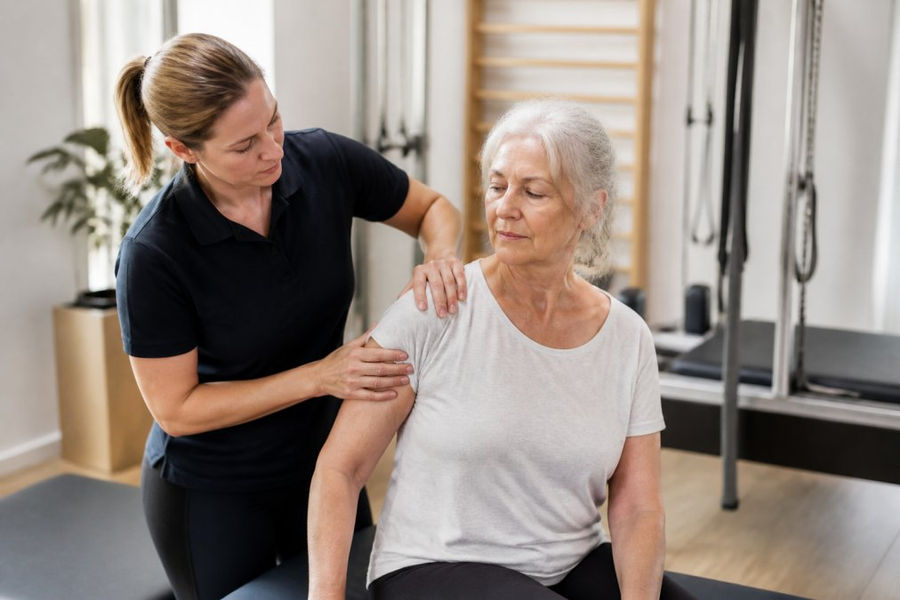
Osteopathy treats age-related joint stiffness by focusing on movement and tissue quality, not just the joint itself. An osteopath looks at your whole body to find where movement is restricted.
What osteopaths do:
Release tight muscles and fascia around stiff joints
Improve blood flow to the joint area
Restore normal movement patterns
Reduce pressure on nerves
Teach you how to move better
The treatment uses gentle, hands-on techniques. Your osteopath applies sustained pressure, stretching, and mobilisation to release tension. Many people feel looser immediately after treatment.
Osteopathy differs from other approaches because it treats the underlying cause of stiffness, not just the symptoms. Rather than only managing pain, osteopaths restore function so you move more freely.
Key Takeaway Osteopathy restores joint movement by releasing tight tissues and improving how your body moves, rather than just treating pain.
Osteopathic Treatment for Osteoarthritis
Osteoarthritis causes joint stiffness because the protective cartilage breaks down. Osteopathic treatment for osteoarthritis focuses on keeping joints mobile and reducing the load on damaged areas.
An osteopath will:
Gently mobilise the affected joint through its full range
Release muscles that have tightened to protect the joint
Improve posture to reduce stress on the joint
Increase circulation to support tissue health
Show you movements that protect the joint long-term
Treatment is tailored to what you can tolerate. Your osteopath works within your pain range, never forcing movement. This approach prevents the joint from becoming more restricted over time.
Movement may become easier, pain could decrease, and you may regain confidence in daily activities. Ongoing maintenance sessions can help prevent stiffness from returning.
Watch Out Osteoarthritis will not reverse, but stiffness can improve significantly. Without treatment, joints often become more restricted and painful. Regular osteopathic care slows this decline.
Benefits of Osteopathy for Mobility
The benefits of osteopathy for mobility extend beyond the treated joint. When your joints move better, your whole body functions better.
Immediate benefits:
Reduced stiffness and improved range of motion
Less pain during movement
Better balance and coordination
Increased confidence in physical activity
Long-term benefits:
Sustained improvement in joint flexibility
Prevention of compensatory movement patterns
Better posture and spinal alignment
Reduced risk of falls in older adults (Checking your browser)
Maintained independence in daily tasks
Movement quality matters more than quantity. Better movement means your joints experience less wear and tear. You protect yourself from future injury.
The benefits of osteopathy for mobility compound over time. As you move more freely, you naturally stay more active. Activity strengthens muscles around joints, which further improves stability and function.
Exercises for Stiff Joints in Older Adults
Exercises for stiff joints in older adults should be gentle and progressive. Start slowly and increase range only as comfort improves.
Daily mobility work (5-10 minutes):
Shoulder circles: slow, controlled circles in both directions
Neck turns: gentle rotation side to side, hold 3 seconds each side
Hip circles: standing or seated, make small circles with your hip
Ankle rolls: rotate each ankle slowly, 10 times each direction
Knee bends: shallow squats holding a chair, 10 repetitions
Stretching routine (hold 20-30 seconds each):
Hamstring stretch: seated, gentle forward fold
Hip flexor stretch: lunge position, keep back knee soft
Shoulder stretch: cross one arm across your chest
Calf stretch: step back, keep heel down
Strengthening (2-3 times weekly):
Wall push-ups: easier than floor push-ups, builds shoulder strength
Chair squats: sit and stand from a chair, 10 repetitions
Seated marches: lift knees alternately while sitting, 20 total
Glute bridges: lying down, lift hips, hold 3 seconds, 10 repetitions
Start with exercises for stiff joints in older adults that feel comfortable. Never push into pain. Consistency matters more than intensity. Three times weekly is better than one intense session.
Pro Tip Warm up before exercising. Five minutes of gentle walking or arm swinging prepares joints for movement and reduces stiffness.
What to Expect from Your First Osteopathy Session
Your first osteopathy session typically lasts 45-60 minutes. Your osteopath takes time to understand your history and what matters most to you.
The process:
Consultation, Your osteopath asks about your symptoms, medical history, and daily activities. They understand how stiffness affects your life.
Assessment, You'll be asked to perform simple movements. Your osteopath observes how you move and feels your tissues to identify restrictions.
Treatment, Hands-on work begins. Your osteopath uses gentle techniques to release tight areas and restore movement. You remain clothed or partially clothed depending on the area being treated.
Advice, Your osteopath recommends exercises and movement strategies for home. They explain what they found and how treatment helps.
Many people feel more relaxed after their first session. Some may notice immediate improvement in movement, while others might notice changes over the next few days as their body responds.
Your osteopath will discuss how many sessions you need. Some people may benefit from a course of sessions, then move to maintenance visits.
Is Osteopathy Right for Your Joint Concerns?
Osteopathy works well for age-related stiffness, osteoarthritis, and movement restrictions. It's also helpful if you've tried other treatments without full success.
Osteopathy is a good fit if you:
Have stiffness that limits daily activities
Want to avoid or reduce medication
Prefer hands-on, non-invasive treatment
Are willing to do home exercises
Want to understand why stiffness happens
Consider other approaches if you:
Have severe joint damage requiring surgery
Have acute injury needing urgent care
Prefer purely exercise-based treatment
Have medical conditions requiring specialist input
A consultation with an osteopath clarifies whether treatment suits your situation. They're honest about what osteopathy can and cannot do. If your needs fall outside their scope, they'll recommend appropriate alternatives.
Nurture Osteo offers a holistic approach to musculoskeletal well-being, addressing pain and dysfunction for individuals of all ages. Specialising in osteopathy, physiotherapy, and massage therapy, they provide expert care within a welcoming reformer Pilates studio. Their highly experienced team supports babies with feeding and settling issues through gentle paediatric and cranial osteopathy, while also delivering relief from chronic pain, sports injuries, and everyday muscle tension for adults. By fusing various therapeutic techniques, Nurture Osteo helps clients restore relaxation, improve joint mobility, and achieve long-lasting recovery through tailored treatment and rehabilitation advice.
Frequently Asked Questions
Can osteopathy help with age-related joint stiffness?
Yes. Osteopathy addresses age-related joint stiffness by improving joint mobility, reducing muscle tension around affected areas, and enhancing circulation. Through manual techniques such as soft tissue release and gentle mobilisation, osteopaths work to restore movement and reduce the stiffness that commonly develops with age. Treatment is tailored to your individual needs and medical history.
Is osteopathy safe for older adults with arthritis?
Osteopathy can be safe and beneficial for older adults with arthritis when delivered by a qualified practitioner. Your osteopath will assess your specific condition, discuss any concerns, and adjust techniques accordingly. Always inform your osteopath of your full medical history, current medications, and any recent diagnoses. A consultation allows your practitioner to determine the most appropriate approach for your situation.
What are the benefits of osteopathy for mobility?
Osteopathy improves mobility by restoring joint range of motion, reducing pain-related restrictions, and strengthening supporting muscles. Regular treatment combined with prescribed exercises helps maintain flexibility and function. Many people experience improved posture, better circulation, and greater independence in daily activities. Results depend on consistency with treatment and home exercises recommended by your osteopath.
How often should you see an osteopath for joint stiffness?
Frequency depends on your individual condition, severity, and response to treatment. Your osteopath will recommend a treatment plan during your initial consultation, which may involve regular sessions initially, then spacing out as improvement occurs. Ongoing maintenance sessions can help prevent stiffness from returning. Discuss your goals and lifestyle with your practitioner to establish the right schedule for you.
Age-related joint stiffness doesn't have to limit your life. Many people regain significant mobility through osteopathic treatment and consistent home exercises. The key is addressing stiffness early and staying committed to movement. Book a consultation with Nurture Osteo to discuss how osteopathy can help restore your joint mobility and confidence in daily movement. Our experienced team will create a personalised plan to get you moving better.
Visit Nurture Osteo today!


Comments